
Lever Binders vs. Ratchet Binders — What’s the Difference?
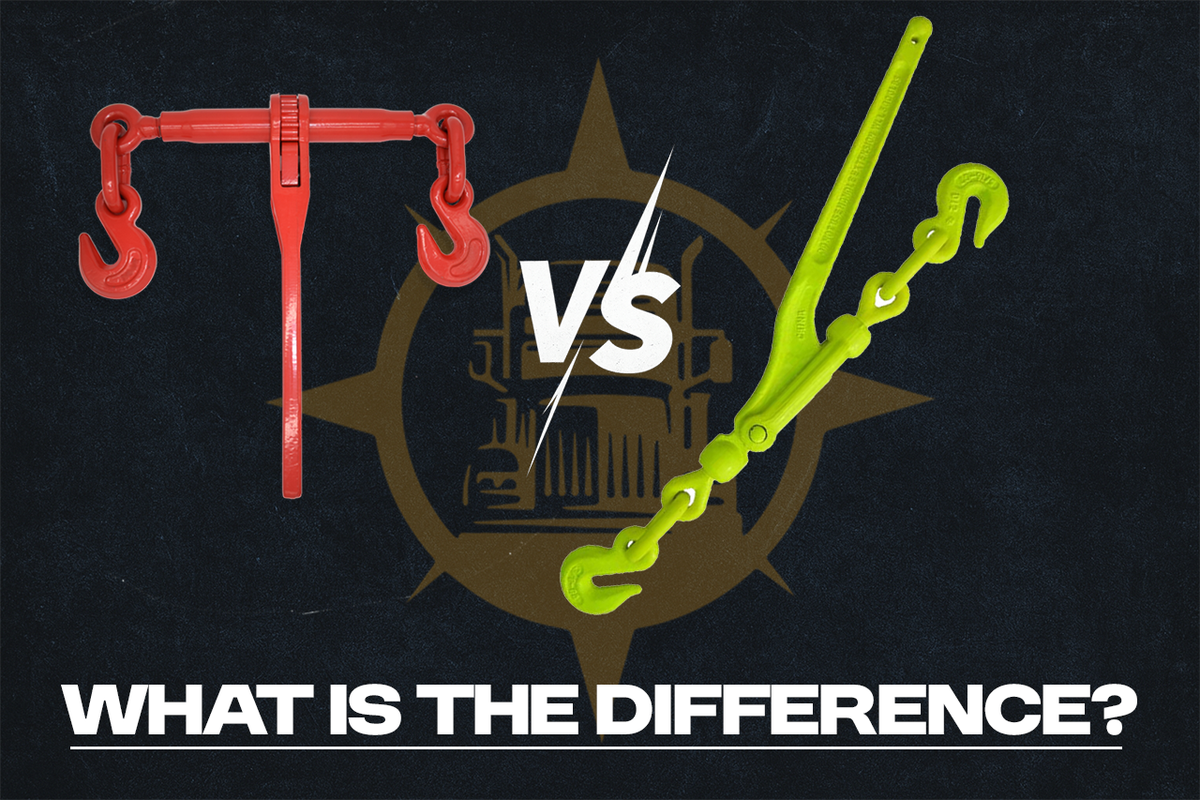
Lever Binders vs. Ratchet Binders — What’s the Difference?
Load securement looks simple until you’re standing on the deck of a flatbed with 20,000 lb of steel in front of you and a DOT officer somewhere in your future. One of the most common questions we hear at Northgate Cargo Control is: “What’s the actual difference between a lever binder and a ratchet binder?”


Both tools tighten chain and secure heavy cargo, but they operate differently, feel different in the hand, and—most importantly—offer different levels of safety and control. Let’s break it down.
What Is a Lever Binder?
A lever binder, often called a snap binder, uses leverage and a quick snapping motion to tighten the chain. When you pull the handle, the binder’s pivoting mechanism multiplies force and locks the chain into place.
Key Characteristics of Lever Binders
- Tightens quickly with one powerful motion
- Requires significant physical strength
- Can “snap back” if released incorrectly
- Lighter and generally more affordable than ratchet binders
- Popular with experienced operators who want speed
What Is a Ratchet Binder?
A ratchet binder tightens gradually using a ratcheting gear and screw mechanism — creating tension through controlled, repetitive turns rather than a single snap action.
Key Characteristics of Ratchet Binders
- Much safer — no snap-back
- Easier on the body
- More precise chain tensioning
- Heavier and typically more expensive
- Preferred by safety-focused fleets
“Both will secure your load — the real question is whether you want speed or control.”
Safety: The Big Difference
Both tools meet load-securing standards, but their safety profiles differ drastically.
Lever binders store kinetic energy that can whip the handle back violently.
Ratchet binders store almost no recoil energy, releasing tension slowly and predictably.
Lever vs. Ratchet Binders: Side-by-Side
| Feature | Lever Binder | Ratchet Binder |
|---|---|---|
| Speed | Very fast tightening | Slower but controlled |
| Ease of Use | Requires strength | Less effort required |
| Safety | Handle snap-back risk | No recoil risk |
| Best For | Experienced operators | Mixed-experience fleets |
When Lever Binders Make Sense
- You want the fastest tightening
- You prefer lighter tools
- Your drivers have strong experience
When Ratchet Binders Make Sense
- Safety is the priority
- You have newer or mixed drivers
- You want smoother tension control
Chain Compatibility
Both binder types match common transport chain sizes:
- 5/16" – 3/8" (most common)
- 3/8" – 1/2"
- 1/2" – 5/8"
Which Binder Does Northgate Recommend?
Both binders have a place depending on your priorities.
For safety, comfort, and control → Ratchet Binder
For speed and simplicity → Lever Binder
Need Binders You Can Trust?
Northgate Cargo Control stocks heavy-duty, fleet-tested securement equipment ready to ship.
Browse Binders